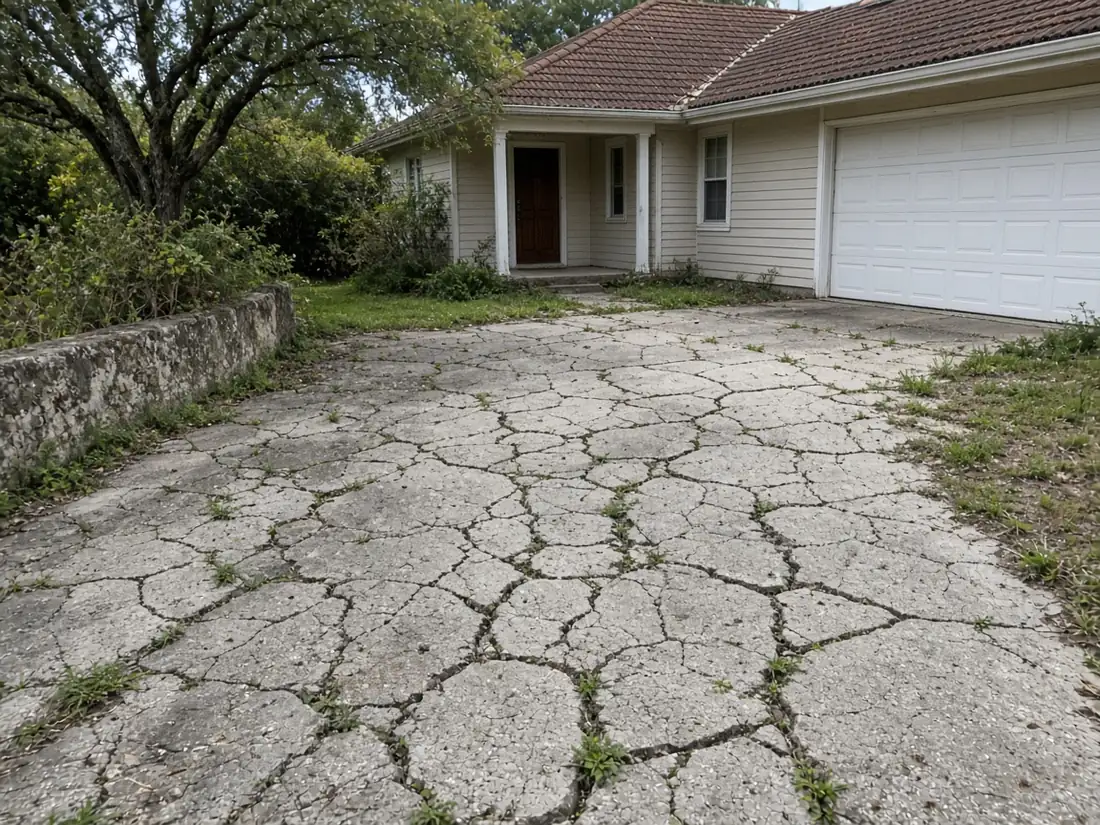
Sort the damage before choosing a product
Look for crack displacement, loose pieces, scaling, settled panels and water collecting in low spots. Photograph the same areas after rain and in dry weather. Surface wear differs from a panel rocking over a void. Ask the pro to describe the failure before recommending a coating or repair material.
A crack filler can help keep debris and water out of an appropriate joint or crack. It does not reconnect a broken structural section or make moving ground stable. Ask how movement will affect the product and what maintenance the repaired area will need.
When localized repair can make sense
An isolated damaged edge, stable crack or small spalled area may justify a focused repair. The surrounding concrete needs enough sound material for the repair to bond. Surface preparation, repair depth and compatibility with vehicle traffic matter more than a product’s color on the label.
Broad 2026 planning estimates for small crack or surface work may start around $300–$1,500 per project. Suitable larger surface repairs might be roughly $3–$8 per square foot. These are estimates, not quotes. Minimum charges and preparation can make tiny areas surprisingly expensive per foot.
When replacement earns a closer look
Widespread breakup, substantial vertical offsets, recurring settlement or poor drainage can favor panel or full replacement. Ask why an overlay would last if the underlying support is still moving. A thin cosmetic layer can follow existing cracks and may create awkward garage or sidewalk transitions.
For comparison, broad 2026 planning estimates for replacement are about $10–$18 per square foot with ordinary removal. Ask whether replacing only affected panels gives a reasonable result. Fresh concrete rarely matches older concrete exactly; settle appearance expectations before approving a partial job.
Compare useful service life and limits
Ask how long the proposed repair is reasonably intended to serve, what movement it can tolerate and what happens if damage returns. No one can promise exact service life from a photograph. A cheaper temporary measure can be practical if its limits are understood and it does not hide a trip hazard.
Check irrigation leaks, roof runoff and soil washing from edges. Correcting water problems may be part of making either option worthwhile. We connect homeowners with independent local pros for free; we do not repair driveways. Get a written scope that separates stabilization, surface work and any drainage changes.